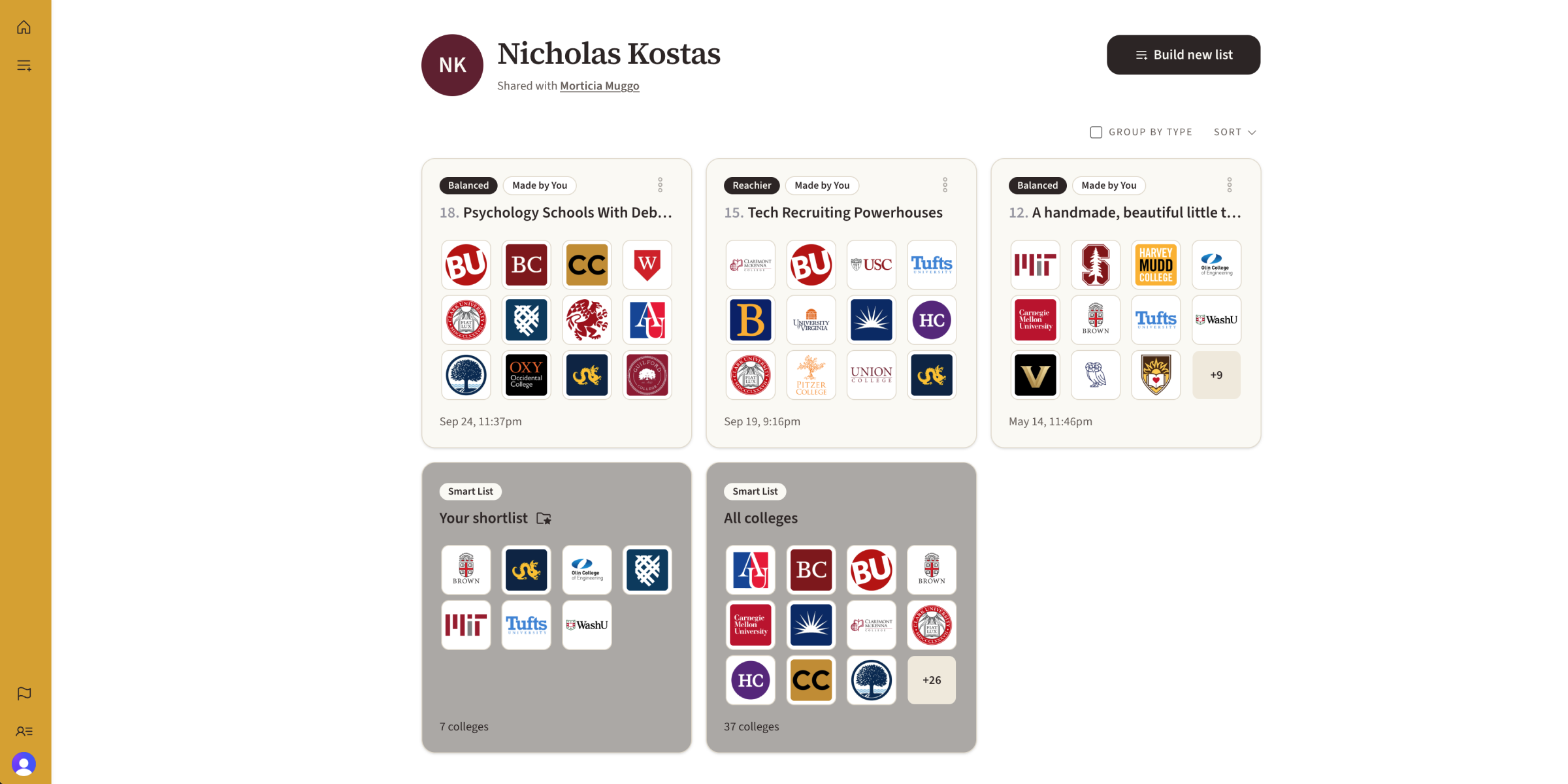
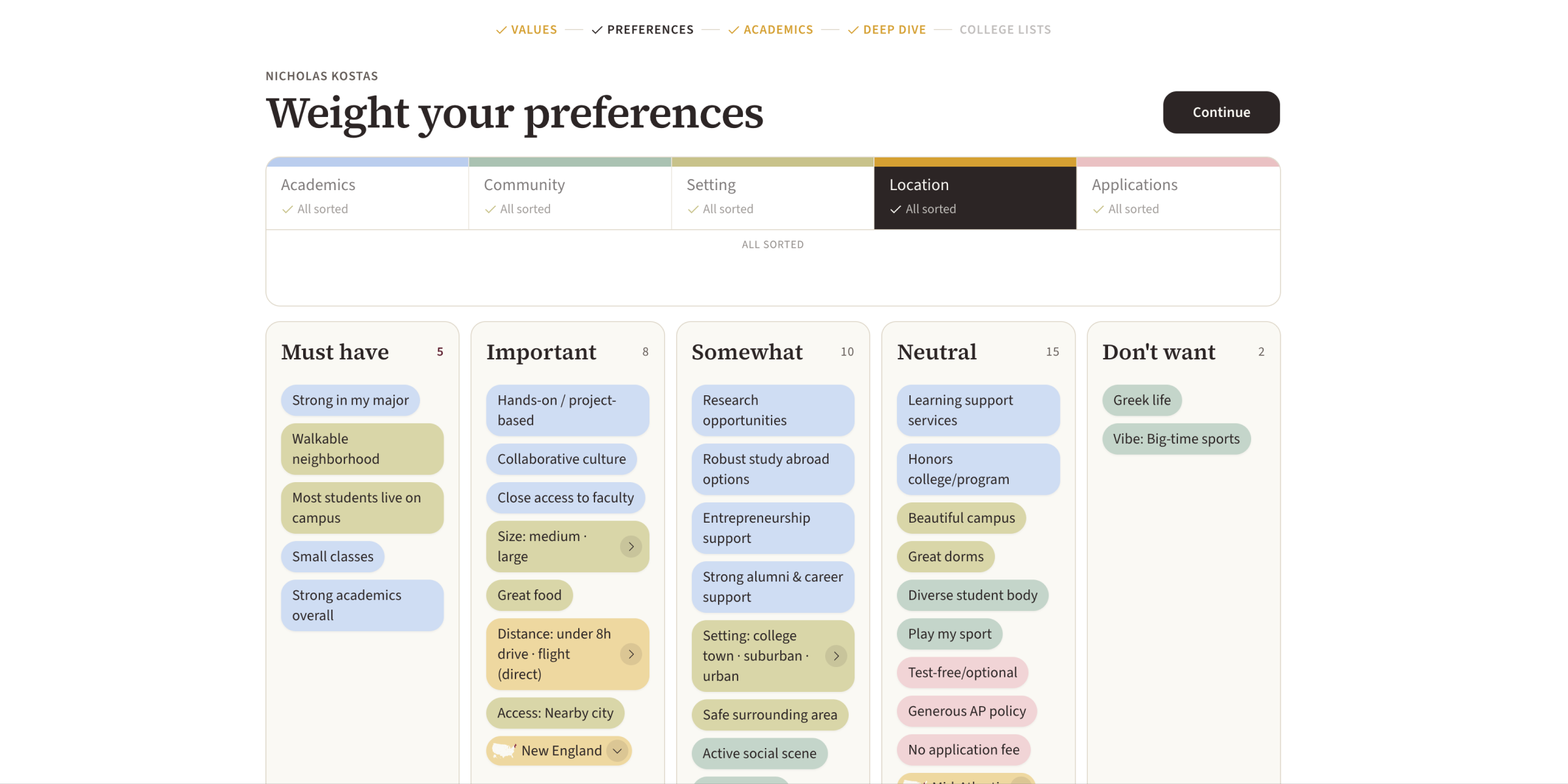
College search involves much more than academics, admission rates, and rankings. Students care about what life will actually be like somewhere: the surrounding neighborhood, social environment, academic flexibility, how easy it is to get home, and whether they can picture themselves there.
Much of this information is surprisingly difficult to find or compare.
I spent a lot of time learning what students and families care about, deciding which information to collect, and figuring out how to make it useful without overwhelming people.
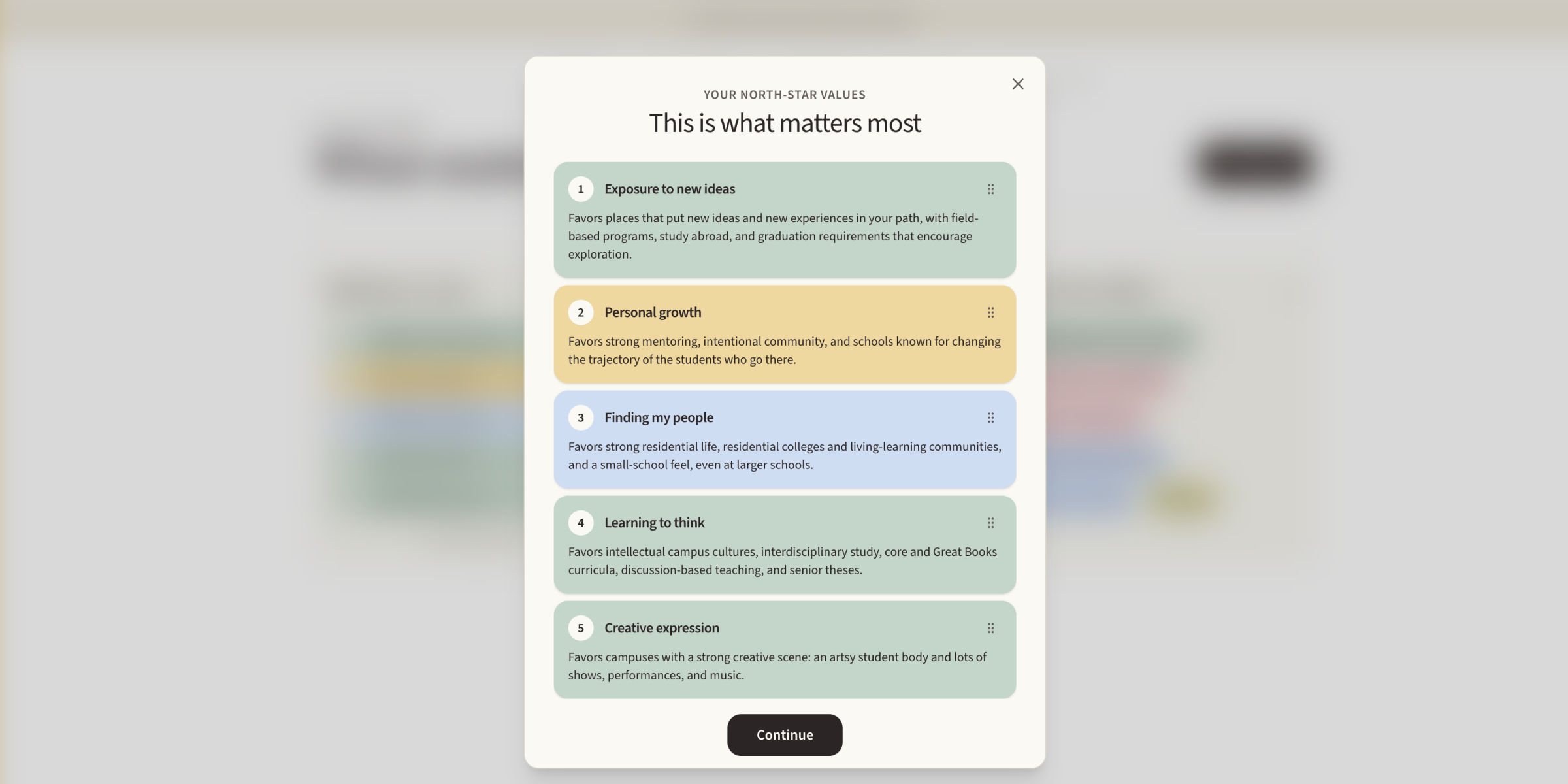
One challenge was learning enough about each student without putting them through a tedious series of forms. I explored ways to make the intake engaging while still capturing meaningful preferences and priorities.
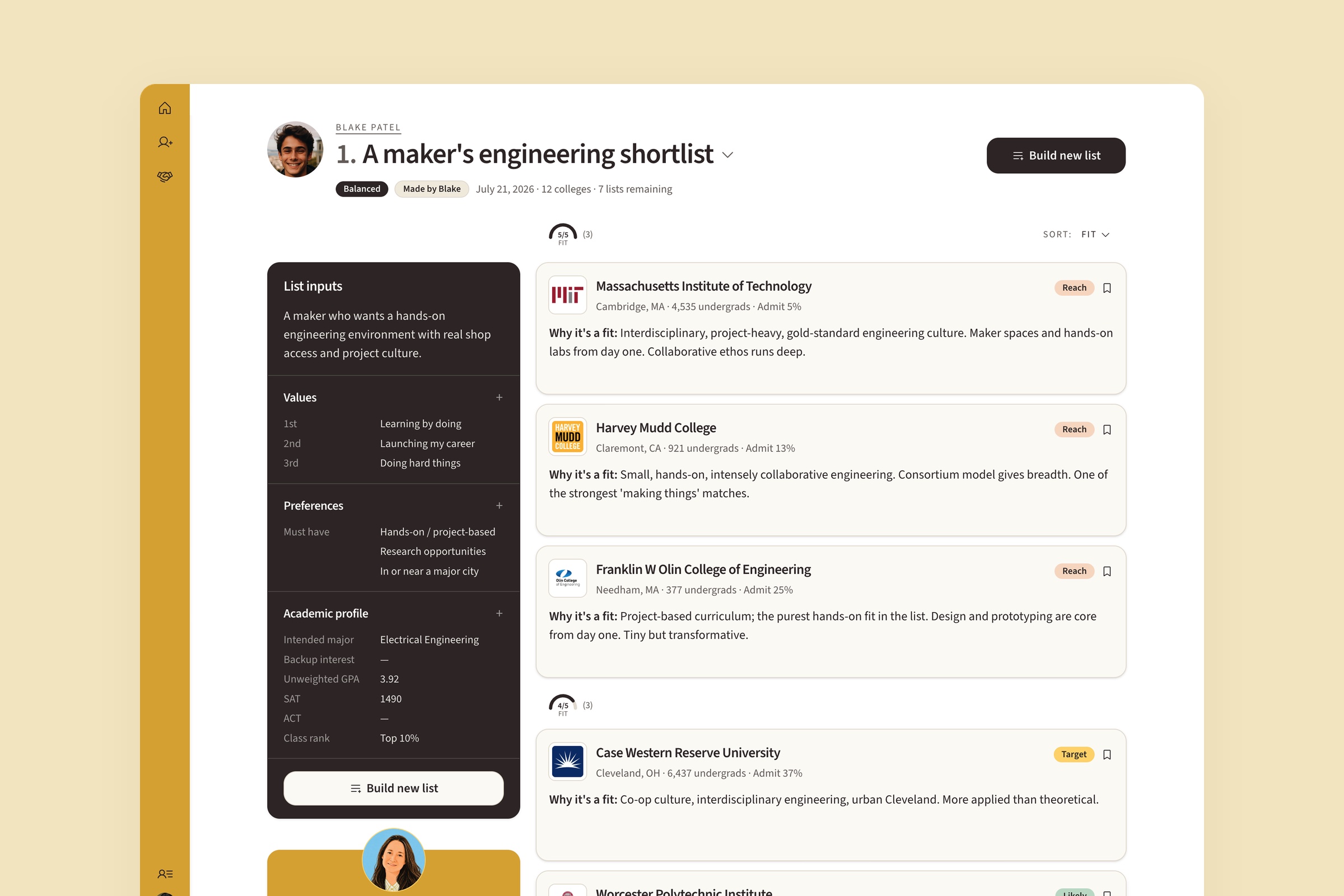
The payoff was personalization that went beyond generating a college list. I could also tailor the details surfaced within individual college profiles, making the research more relevant to each student's interests and circumstances.
The goal was to help people make better decisions with less effort.
Personalization is only as good as the data behind it, so I built the research myself. I gathered facts on 408 colleges from federal data, each school's own published reports, and their websites, then decided what to keep, how to check it, and how to keep it current.
A wrong number is easy to miss, because nothing looks broken. Once, a parsing change misread the class-size tables for 30 schools, and Oberlin's share of small classes dropped from 78% to 15%. My test personas caught it when Oberlin fell off ten lists at once. After that, I added automatic checks that stop a suspicious number before it reaches the database, and a running record of every data gap so nothing missing or out of date ships quietly.
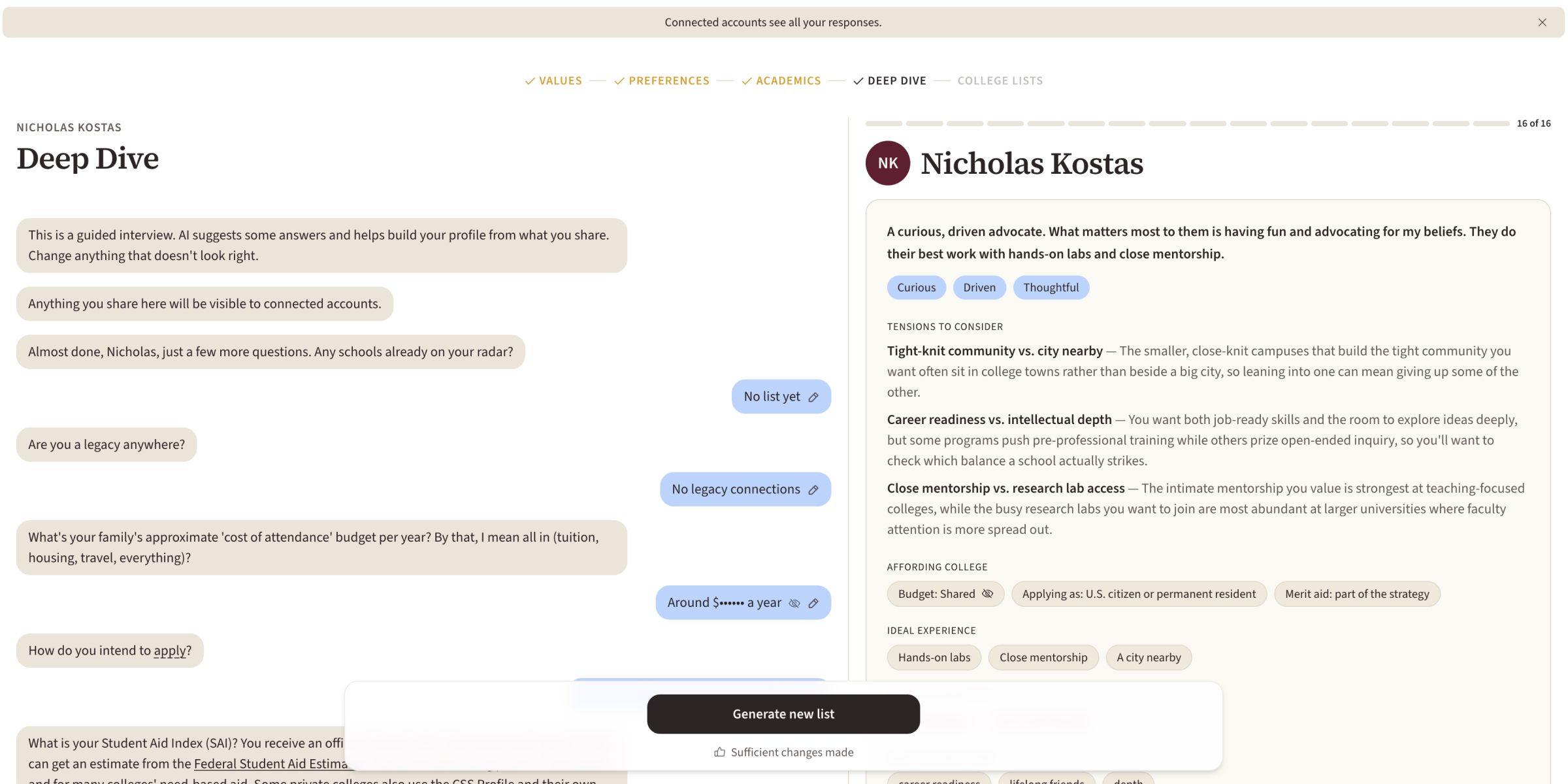

Waysmith began as a standalone website for exploring colleges and building lists. The AI connector came later.
I'd put a lot into curating the college research and began asking why people should have to visit my website to use it. Many were already asking college questions in ChatGPT and Claude. There was also a practical business reason: building my own AI chat experience would mean paying for users' model usage.
Instead, I built an MCP connector that brings Waysmith's research into ChatGPT and Claude, the AI assistants people already use.
The website and connector serve different needs. The website supports structured exploration, comparison, and list-building. AI assistants let people explore the same research conversationally, wherever they're already working.
It changed how I thought about the product. The value didn't have to live entirely within an interface I controlled.
Throughout my career, I've often worked beyond traditional design responsibilities, helping founders define products, set priorities, and make tradeoffs.
With Waysmith, I went further and built the entire product myself.
I designed the experience, wrote the application code, integrated existing services, built the AI connector, and worked through the details of getting a working product into people's hands.
That didn't mean reinventing everything. I used established services where they made sense, such as Clerk for authentication, and focused my effort on what made Waysmith distinctive.
AI-assisted development let me prototype directly in code, moving quickly between ideas, working interactions, and real data. Instead of handing off designs for implementation, I could build and evaluate them myself.
AI changed my design process, but it didn't mean abandoning good design practices. Moving faster made it even more important to stay deliberate.
I created 48 synthetic student personas with different interests, academic profiles, priorities, and constraints. Running them through the product after each significant change helped me check recommendations, find gaps, and calibrate how personalized information was presented.
I also built a system for keeping continuity as the product evolved: a decisions ledger recording what I decided and why, a running list of features and priorities, and a living style guide.
AI became part of managing the process itself. Because it could read the reasoning behind earlier decisions, I could use it to track work, evaluate new ideas, and test choices against the product's design principles.
I wanted speed without giving up consistency, quality, or judgment.
AI has expanded what I can do on my own, from product strategy and UX through to data and working software. It has also changed how I prototype, test, and manage the design process.
But the fundamentals remain. Understanding users, defining the right problem, making thoughtful tradeoffs, and knowing when to slow down matter as much as ever.