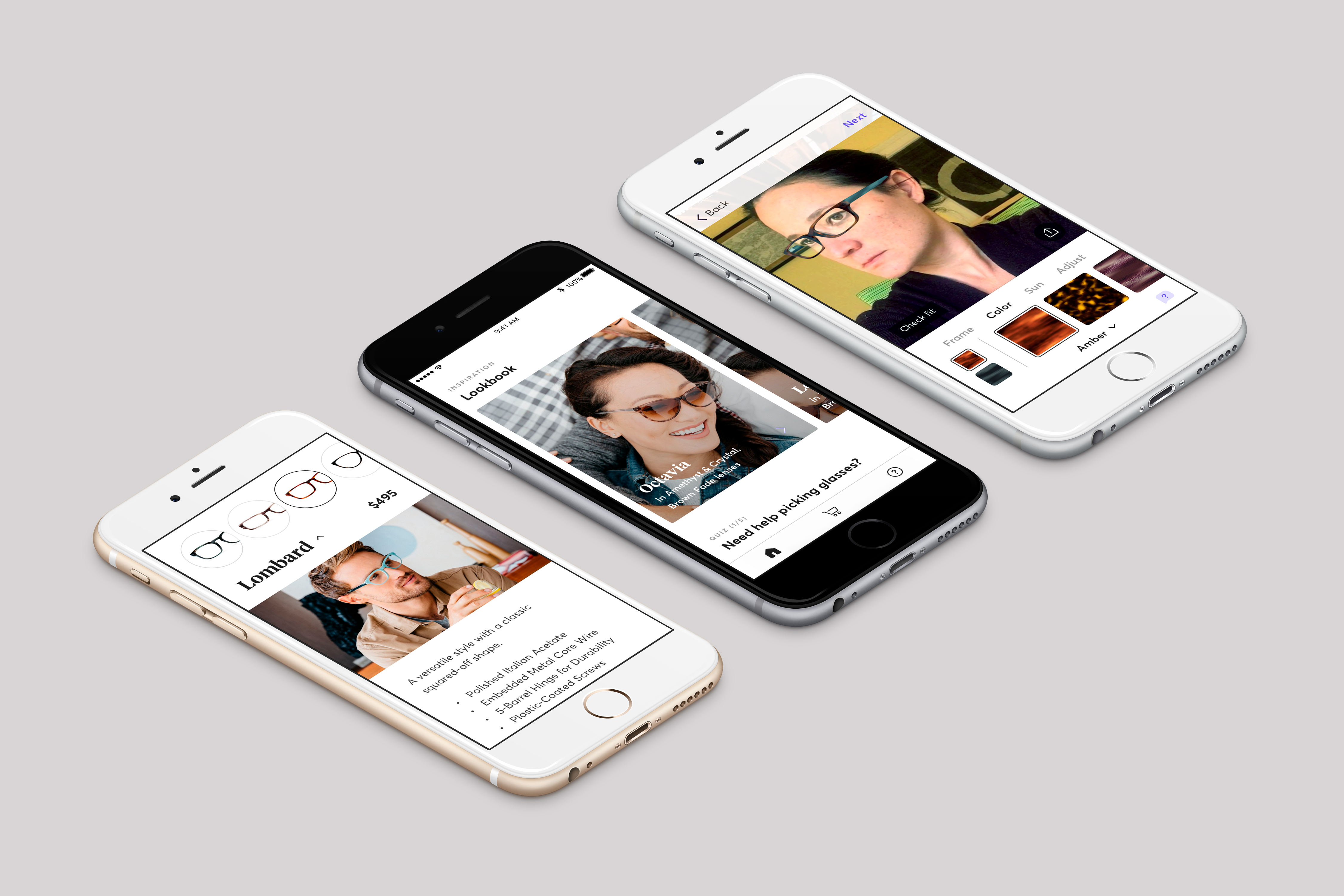
The app initially focused on the functional flow for designing and purchasing custom-fit glasses. It assumed that people understood and believed the value proposition.
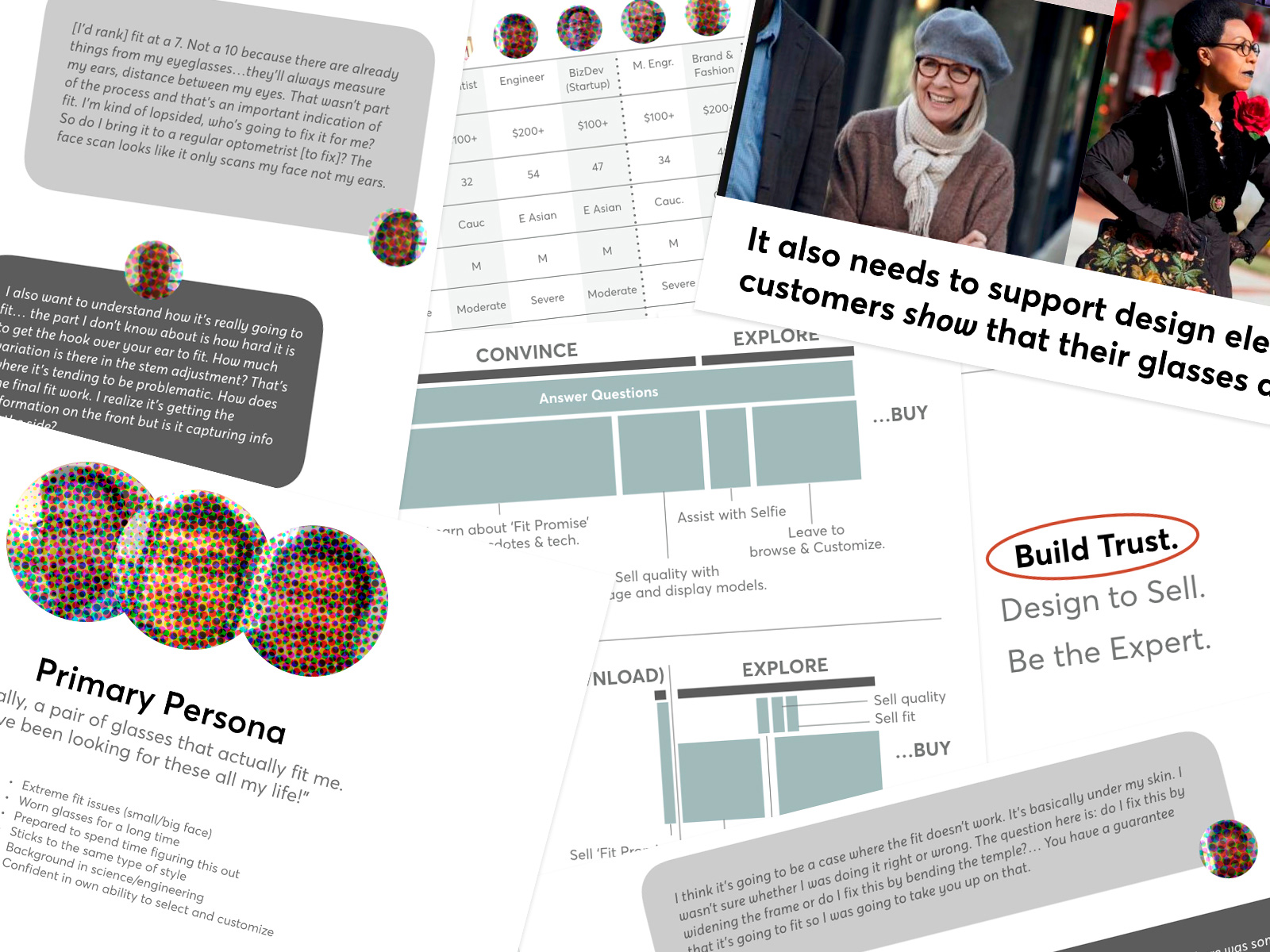
My early research surfaced a more fundamental obstacle: many users were skeptical that an app could really create eyewear tailored to their faces. The team had invested heavily in making that technology work, but customers needed evidence before they were comfortable buying.
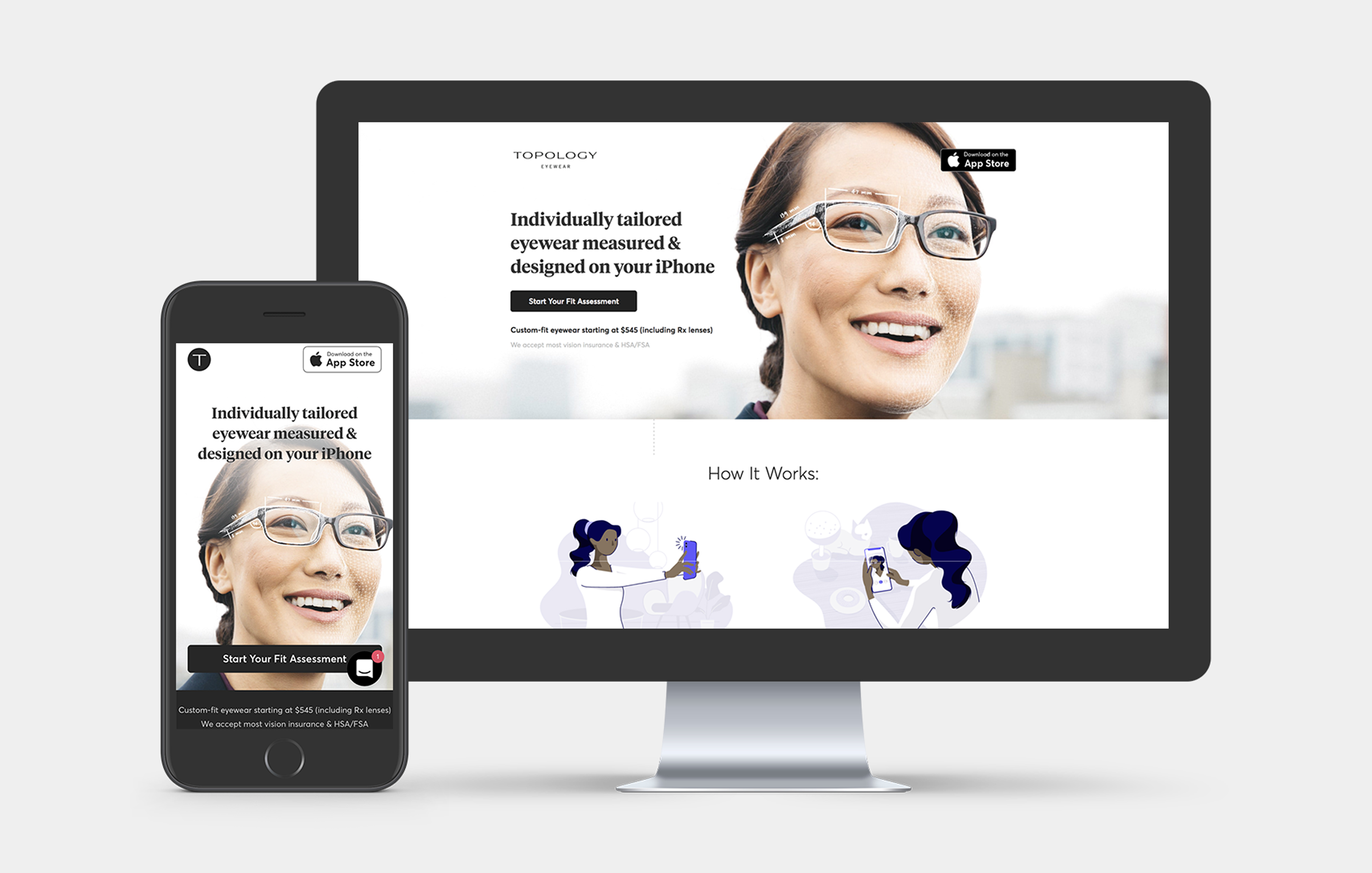
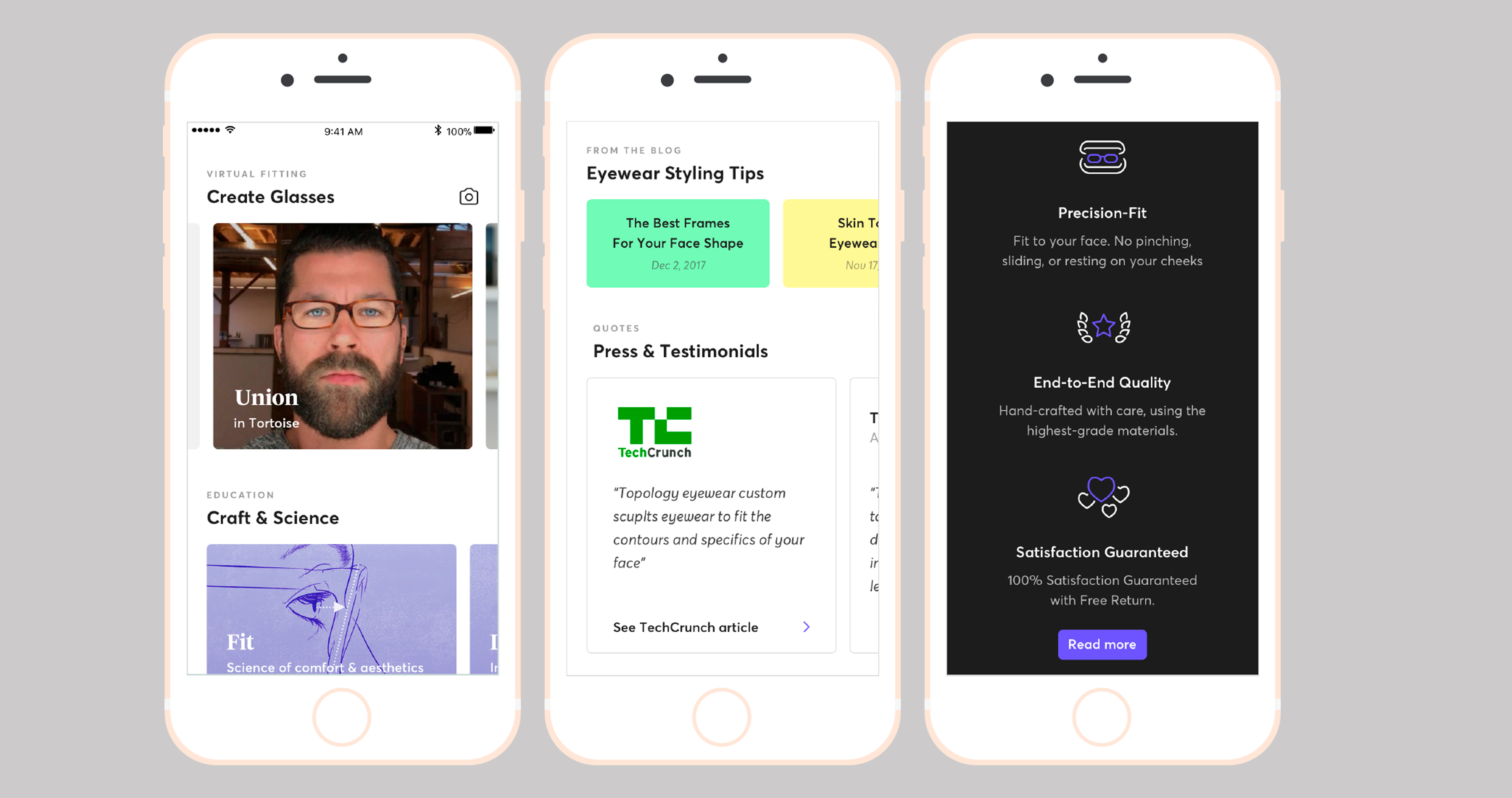
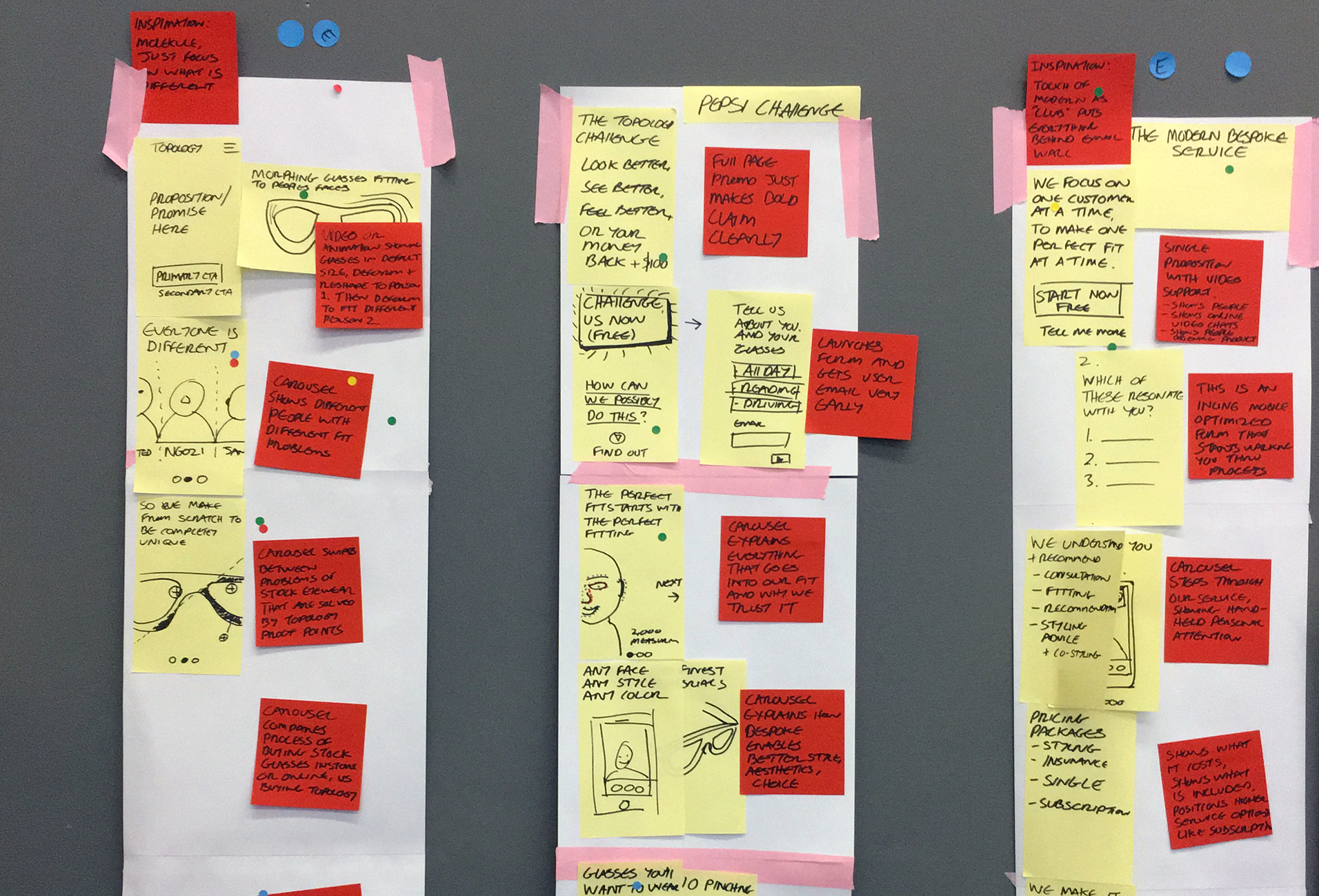
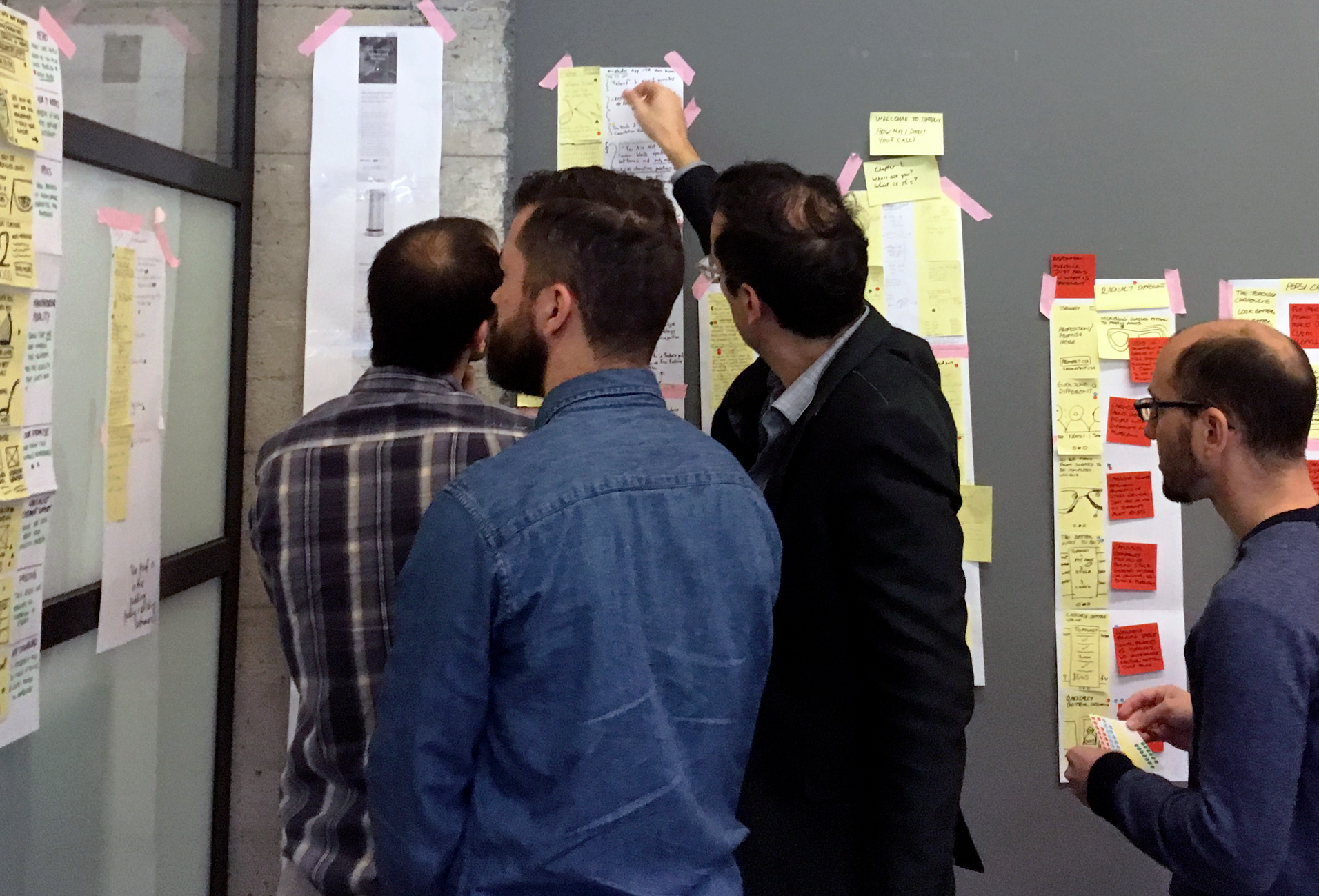
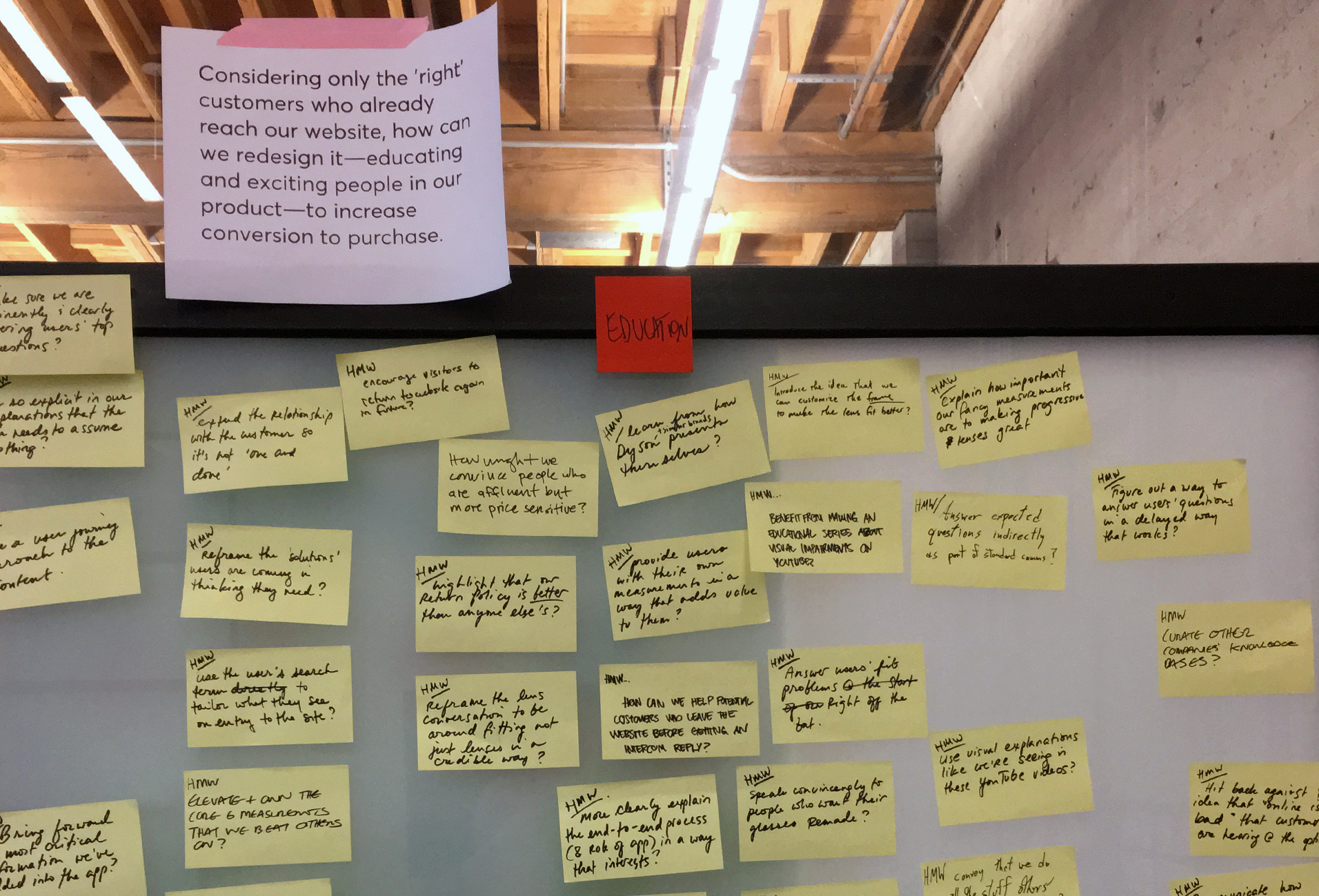
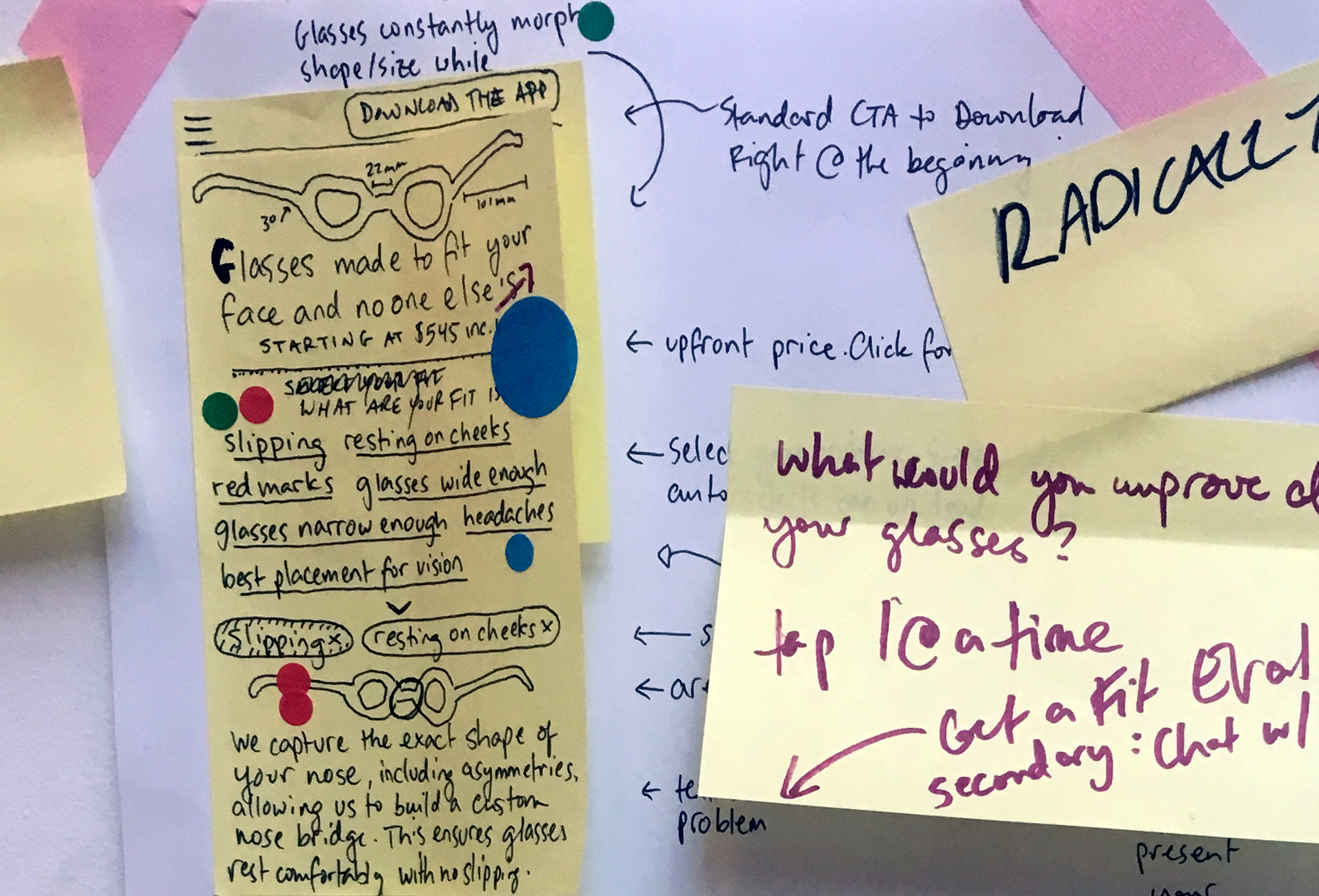
I explored how content might build credibility at moments when people had questions—explaining how the measurements worked, what made the fit different, and what to expect from lenses and guarantees. The research also suggested we needed to look beyond the app. I facilitated a Google Design Sprint with senior leadership to rethink the marketing homepage and create a direction that could be implemented quickly.
The result was a clearer approach to explaining the product across the website and app, rooted in what customers actually needed to understand.
Working so closely with a product could make it easy to overlook which parts of its story were obvious only to the team. A novel capability needed more than an attractive interface and a confident claim: customers needed to understand it and believe it.
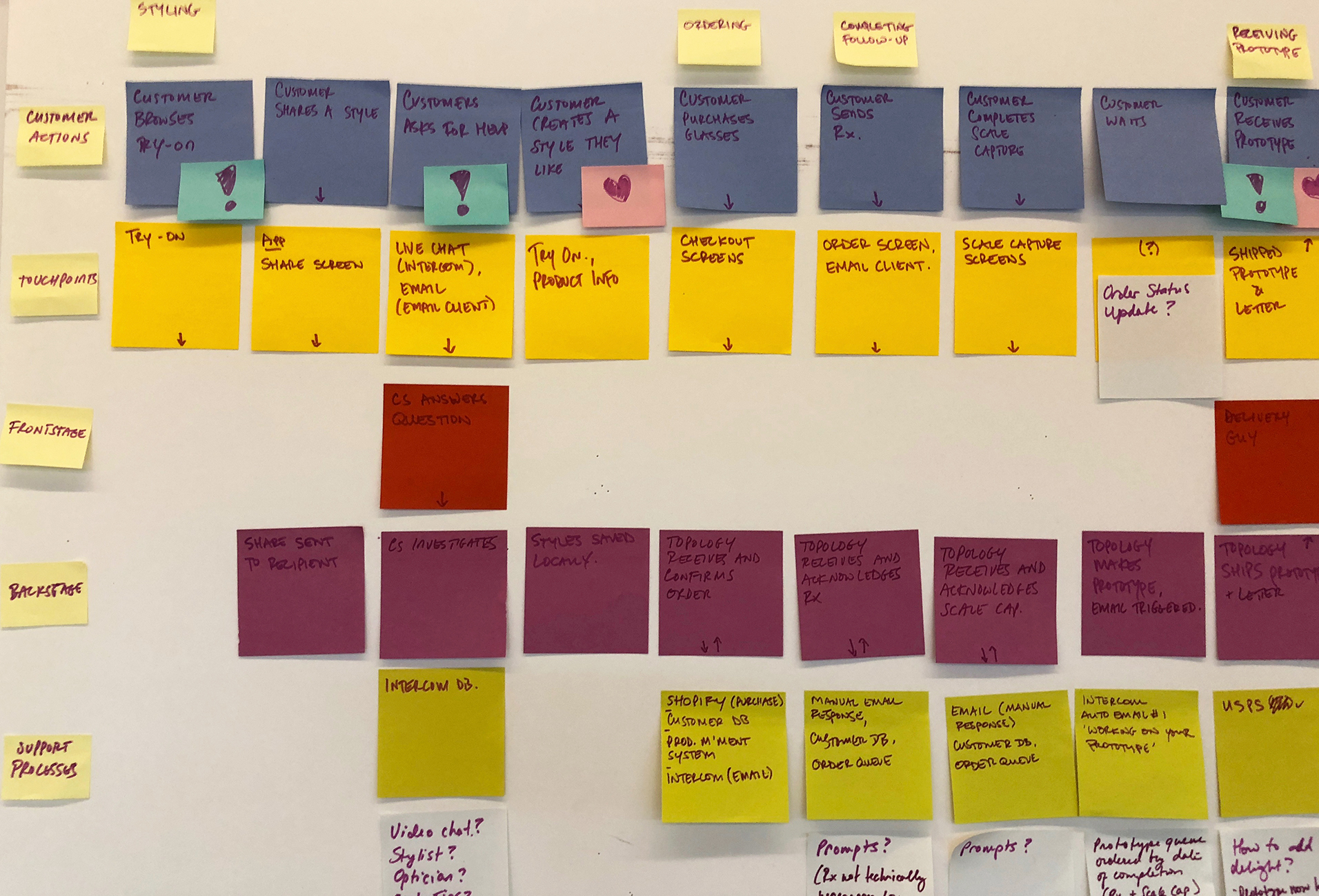
Research revealed that trust—not simply usability—was a core design problem. Addressing it meant thinking about content and the entire customer journey, not just the purchase flow.