
The central design challenge was translating complex social and environmental data into something people could understand and act on. What does it mean for a company to be sustainable? How do you compare performance across different dimensions? And how much information does someone really need when deciding where to shop?
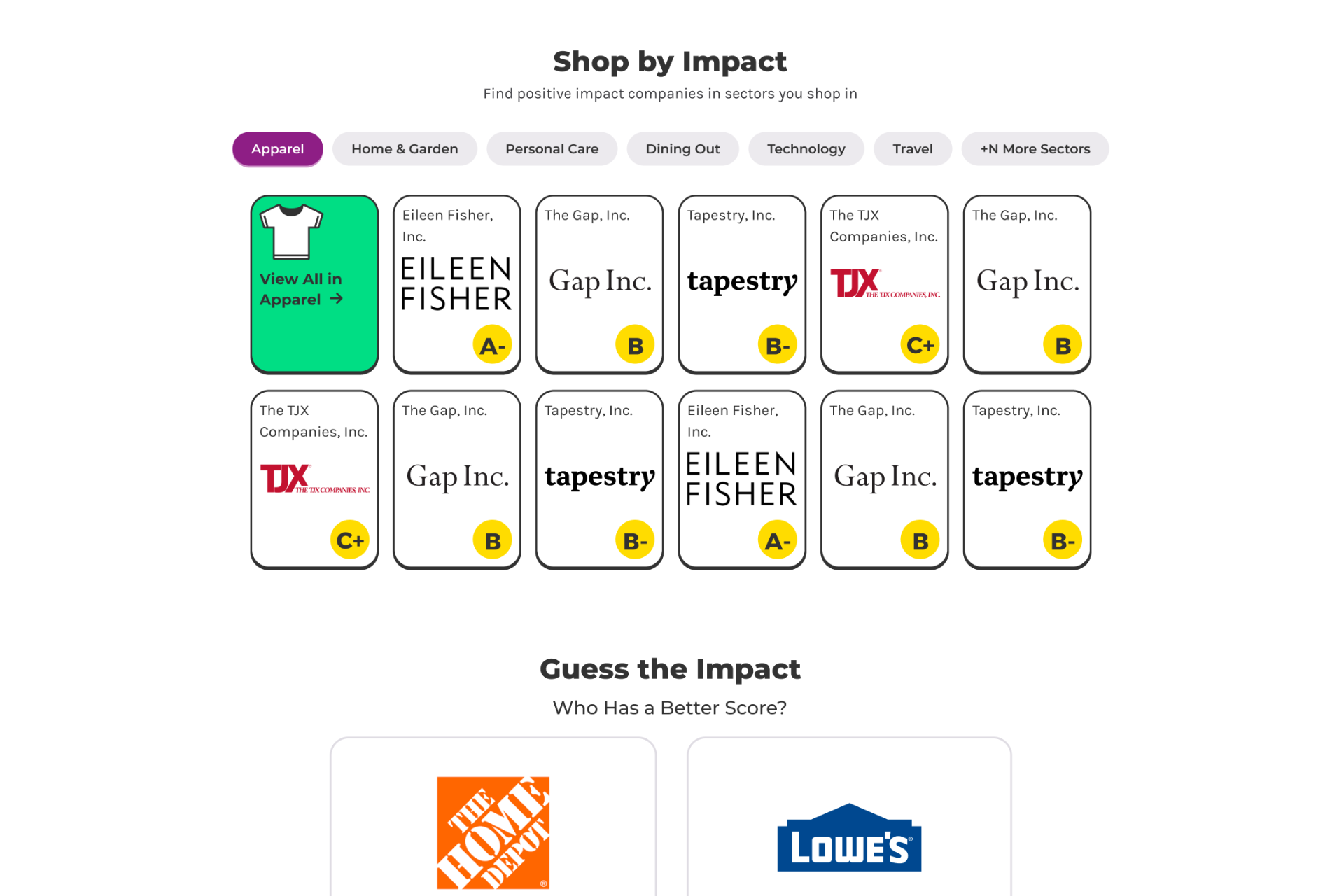
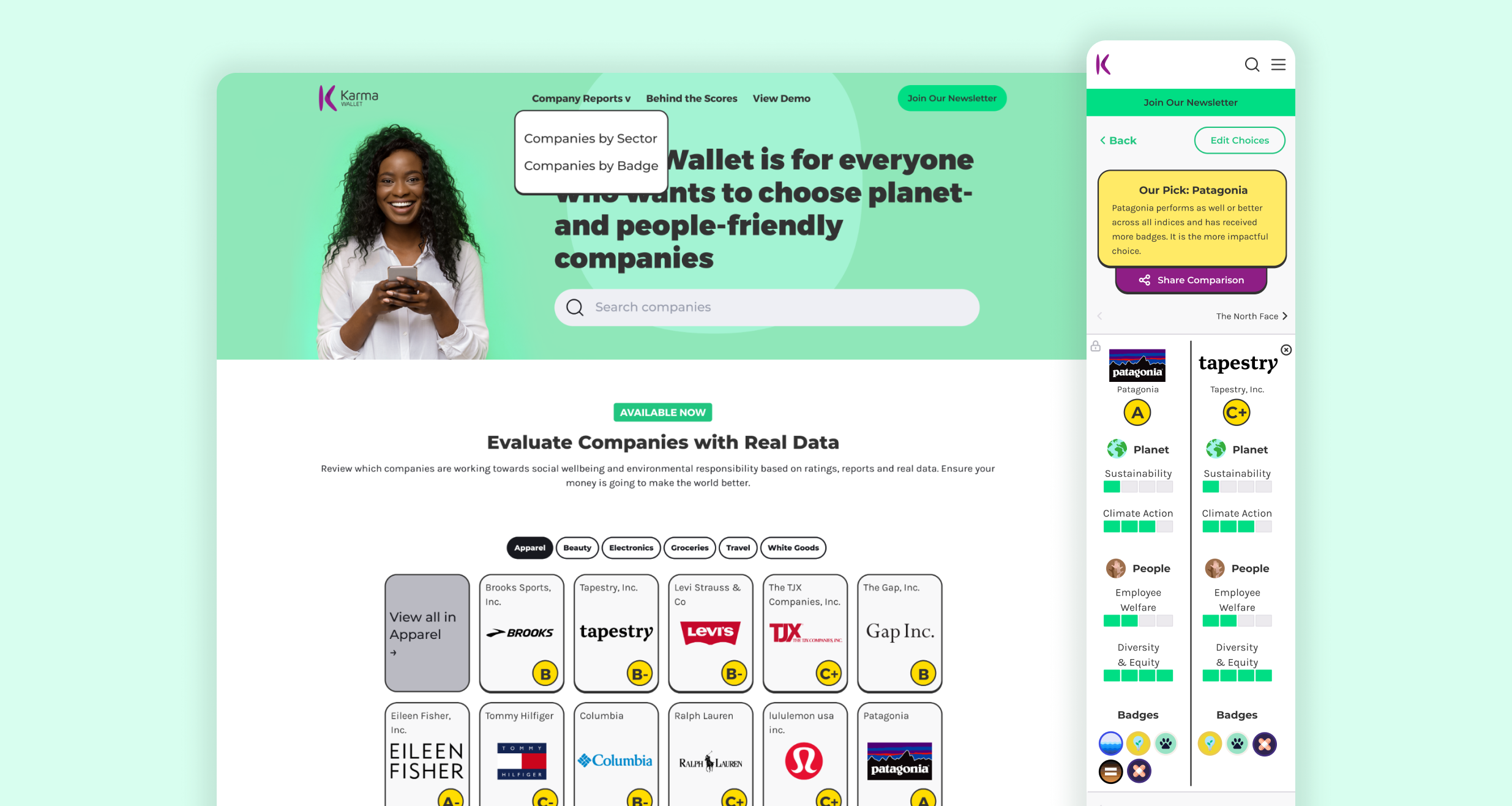
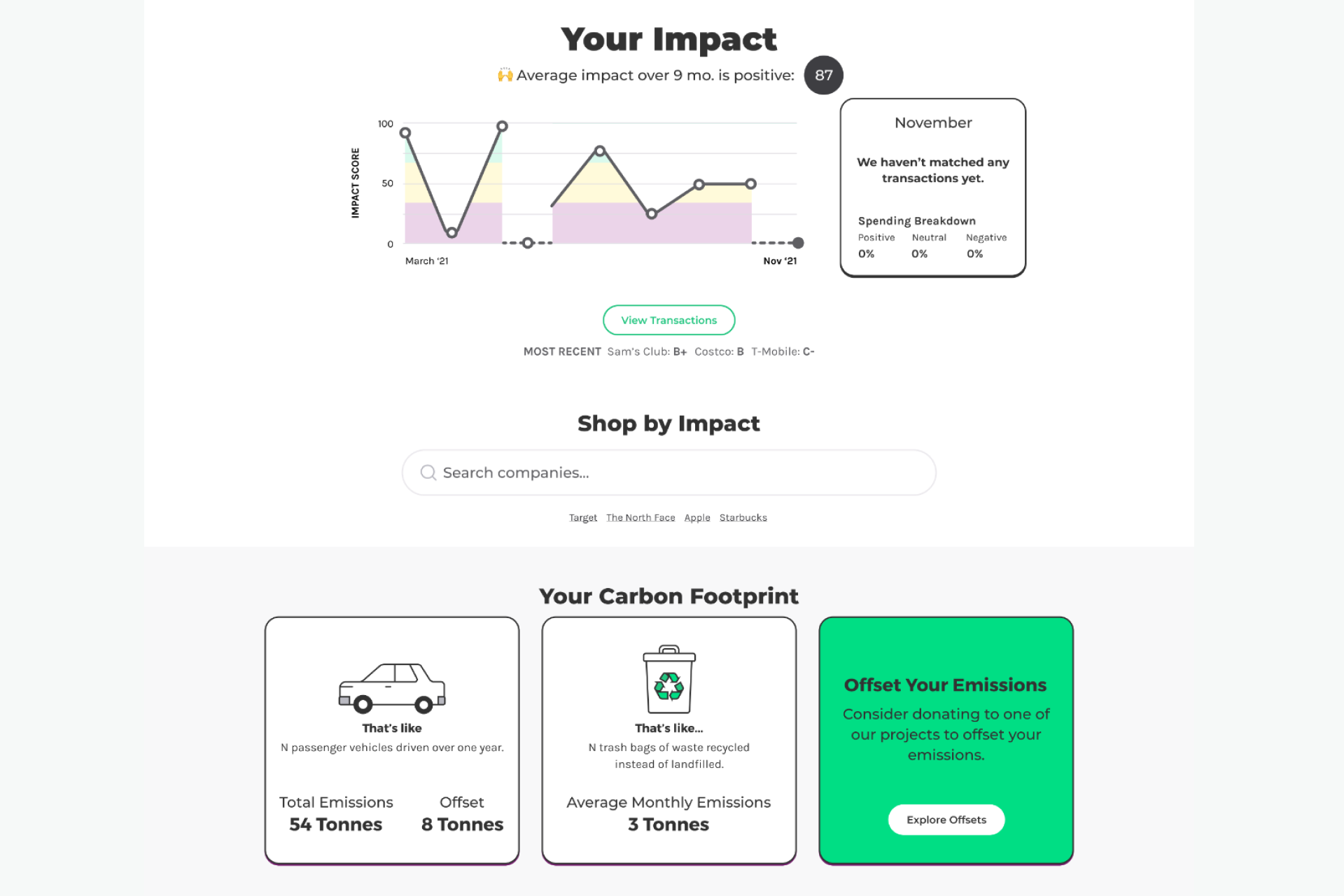
I designed the Karma Score around several levels of detail. An overall letter grade gave users a quick assessment, while Planet and People categories showed strengths and weaknesses across specific measures. People who wanted to go deeper could explore individual criteria and badges recognizing particular achievements. When there wasn't enough data for a defensible grade, we made that clear.
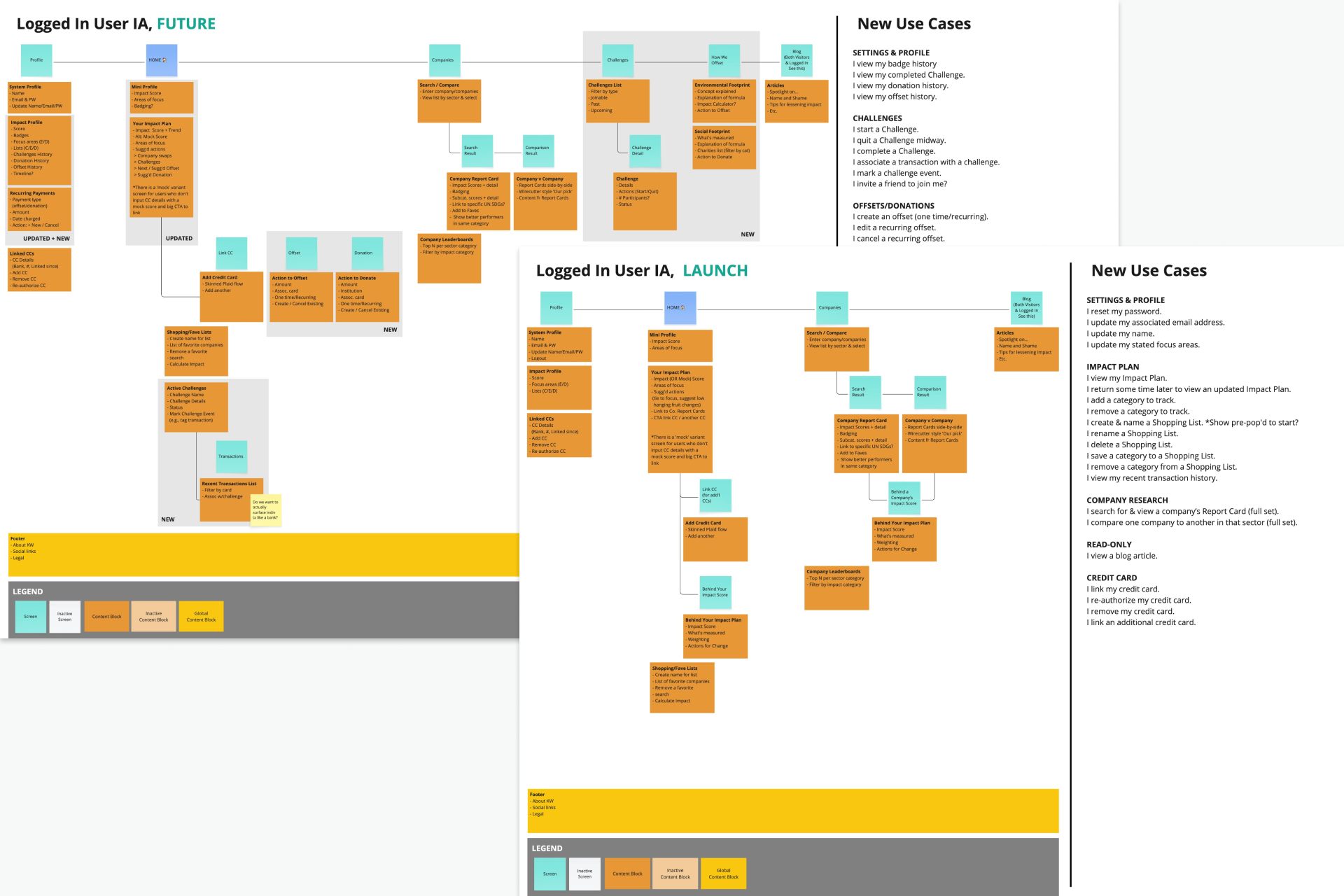
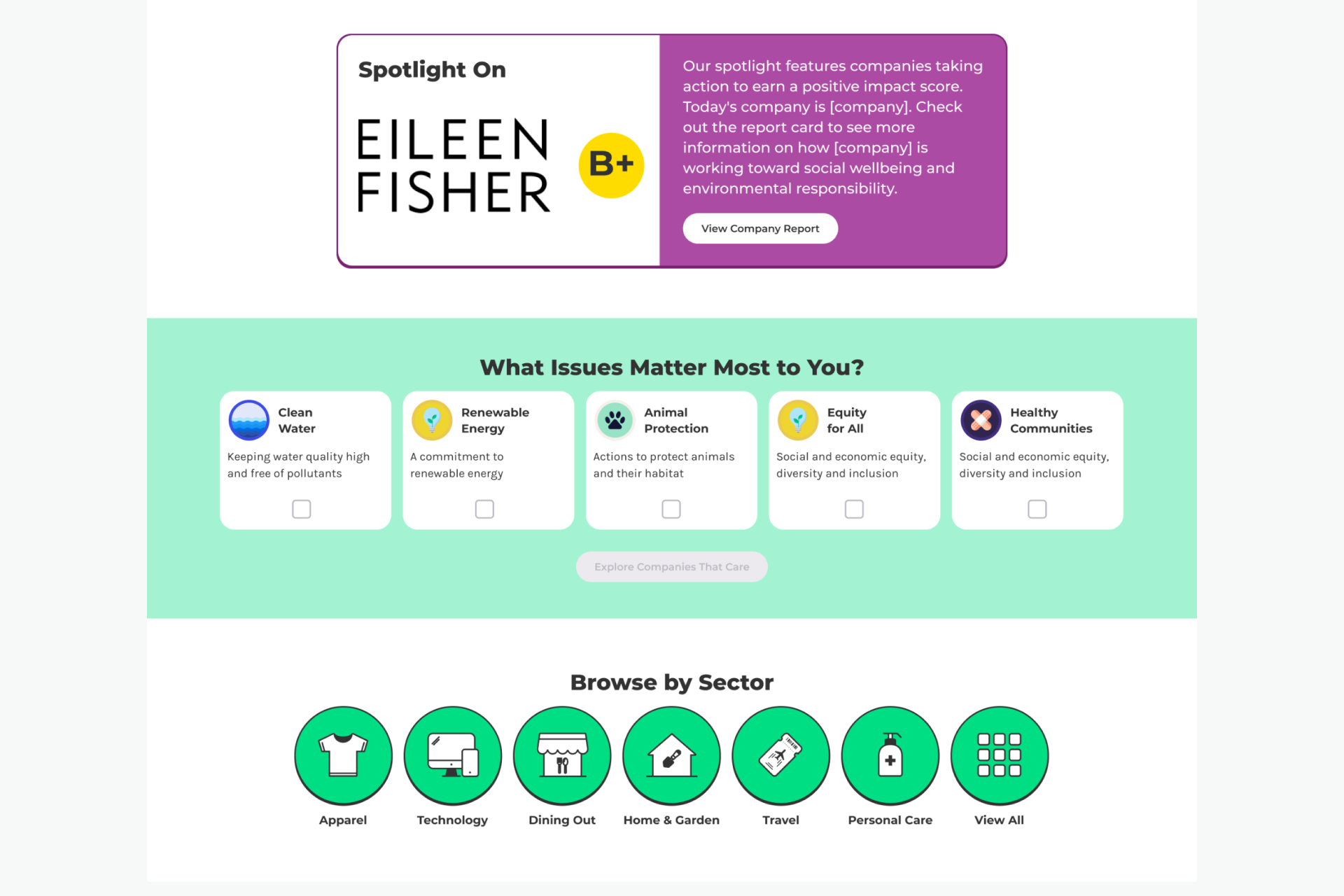
Understanding a score was only part of the experience. I designed different ways to discover brands: searching for a familiar company, shopping within a category, or exploring businesses that supported causes a user cared about. To encourage repeat engagement, I introduced a “Guess the Impact” game that asked users to predict which of two familiar companies scored better. The answers weren't always what people expected, making it a playful way to challenge assumptions and explore more.
The challenge throughout was keeping the basics easy to grasp without sacrificing the detail that gave the ratings meaning.
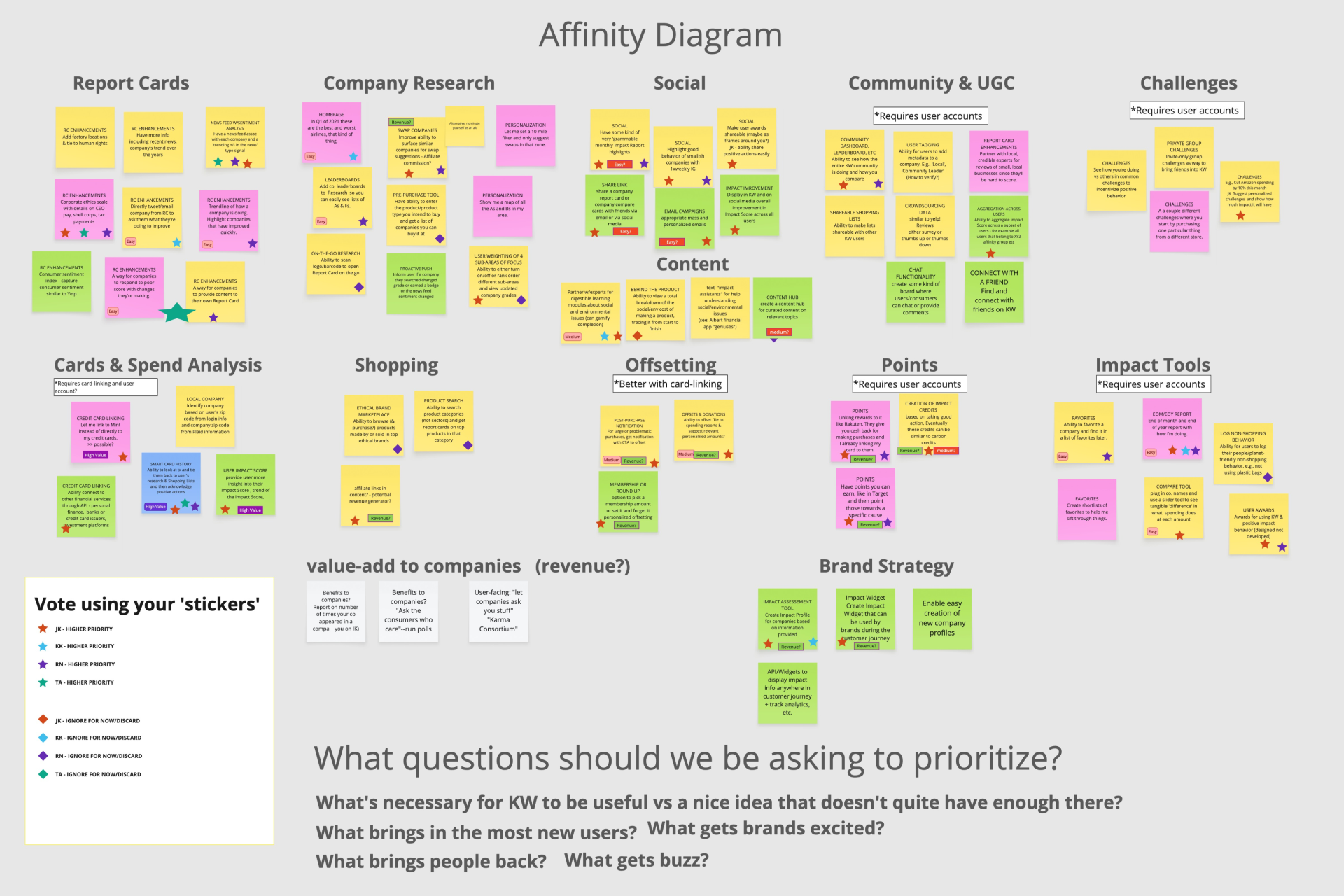
Karma Wallet was one of the first projects where I found myself acting as much like a product manager as a designer. I discovered that I enjoyed the broader responsibility of defining what to build, not just how it should work.
The experience also deepened my appreciation for the relationship between design, product strategy, and business strategy. Thinking through user needs, engagement, and commercial considerations together helped me see how closely connected those decisions really are.