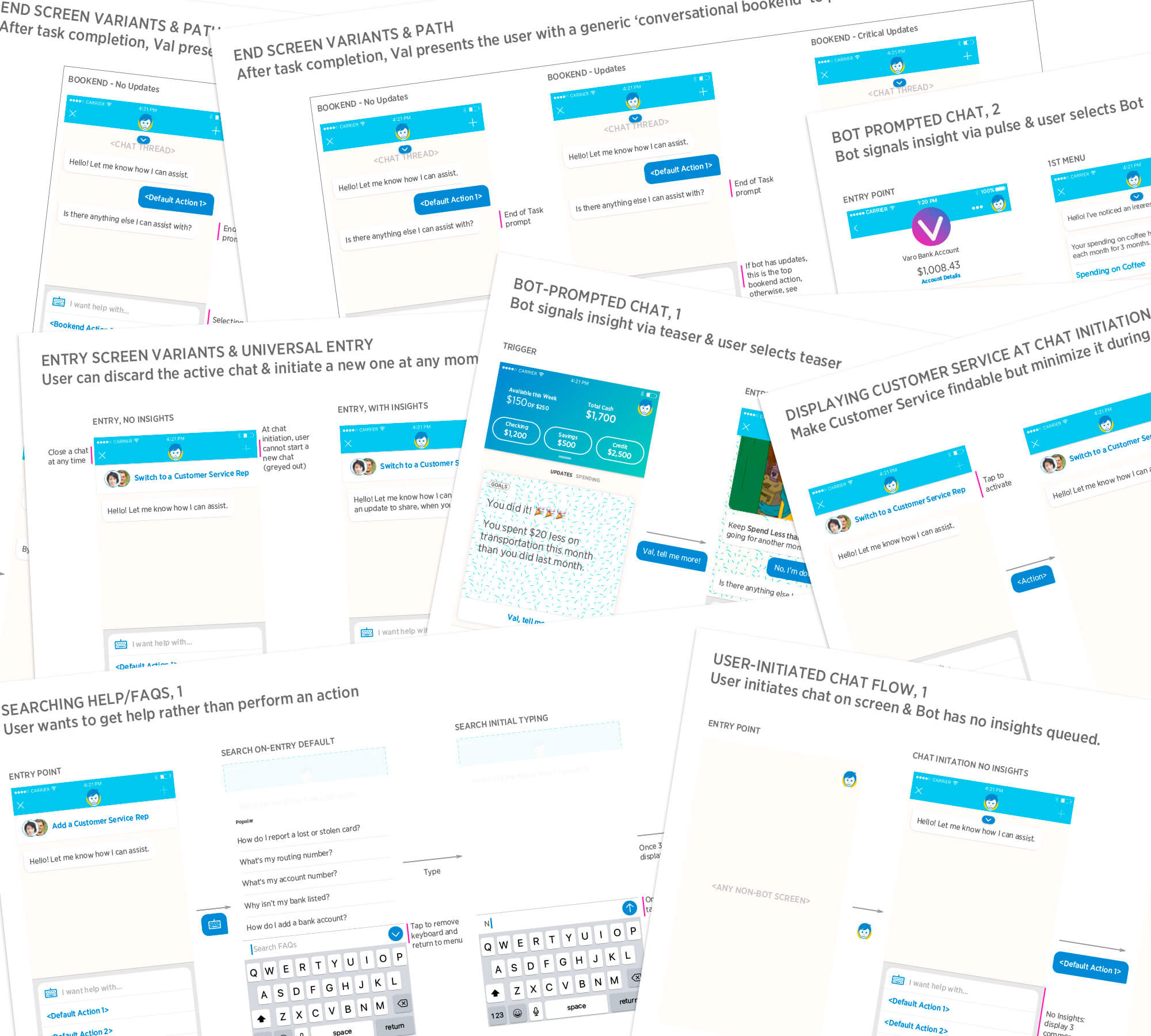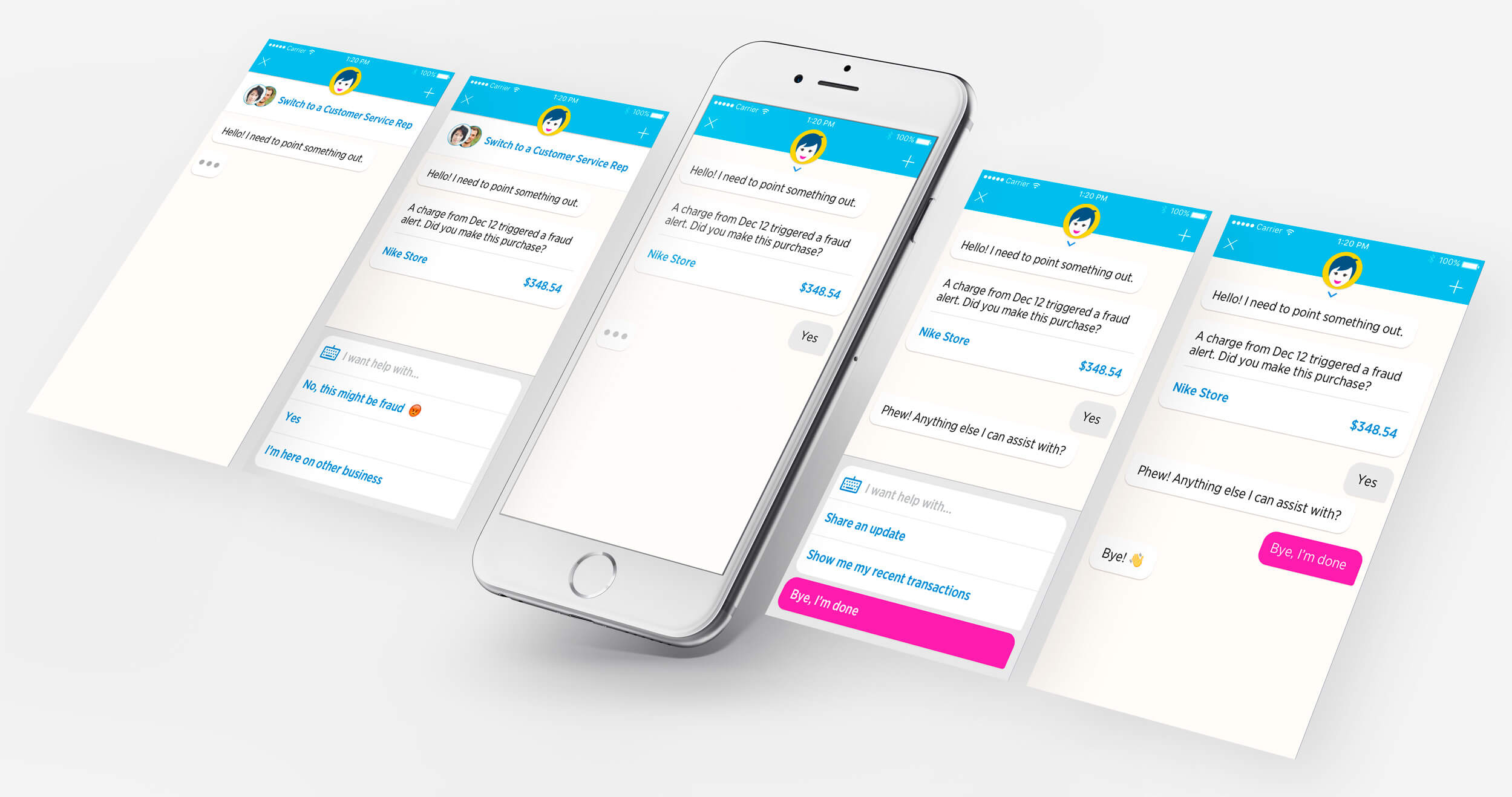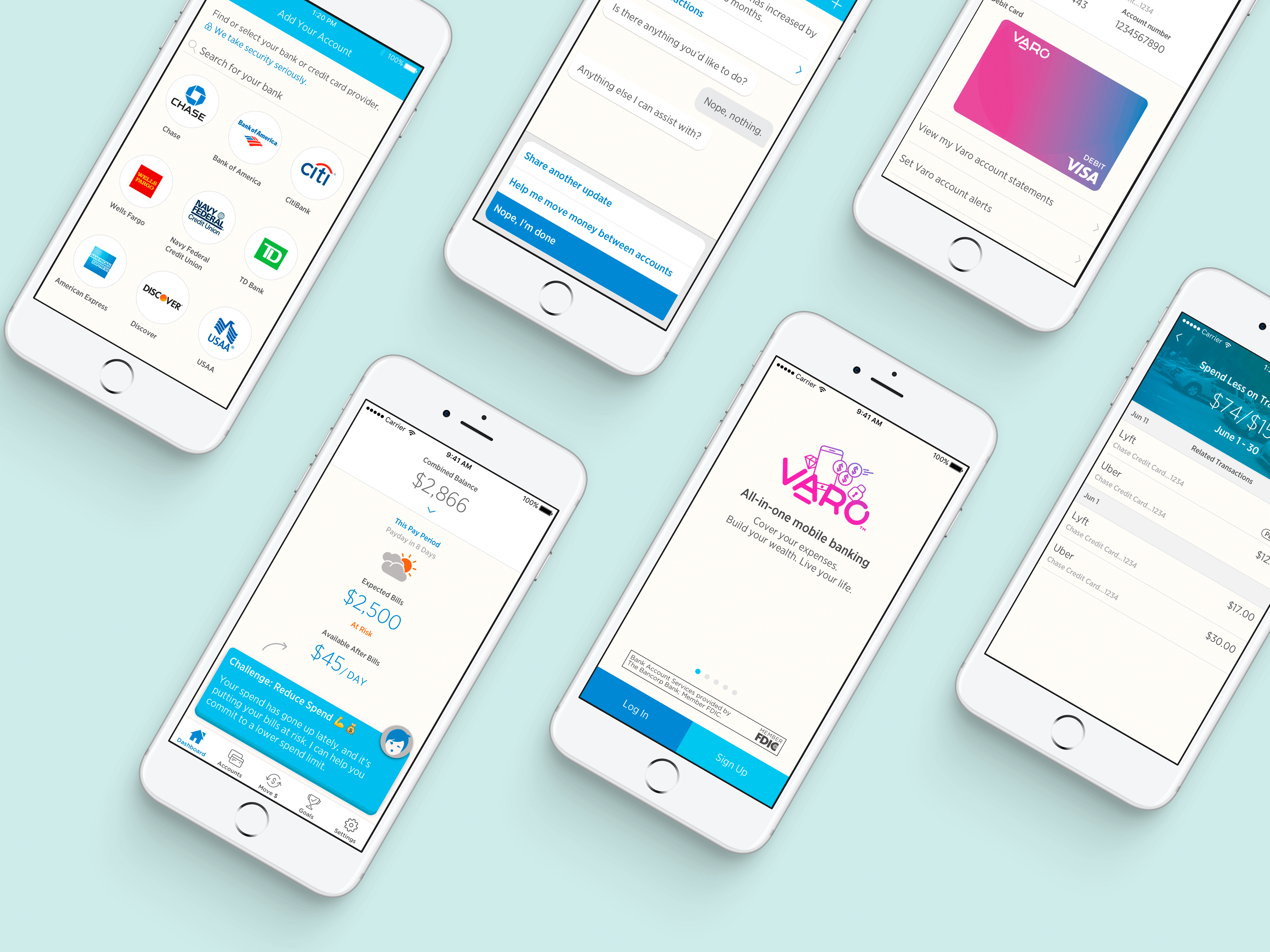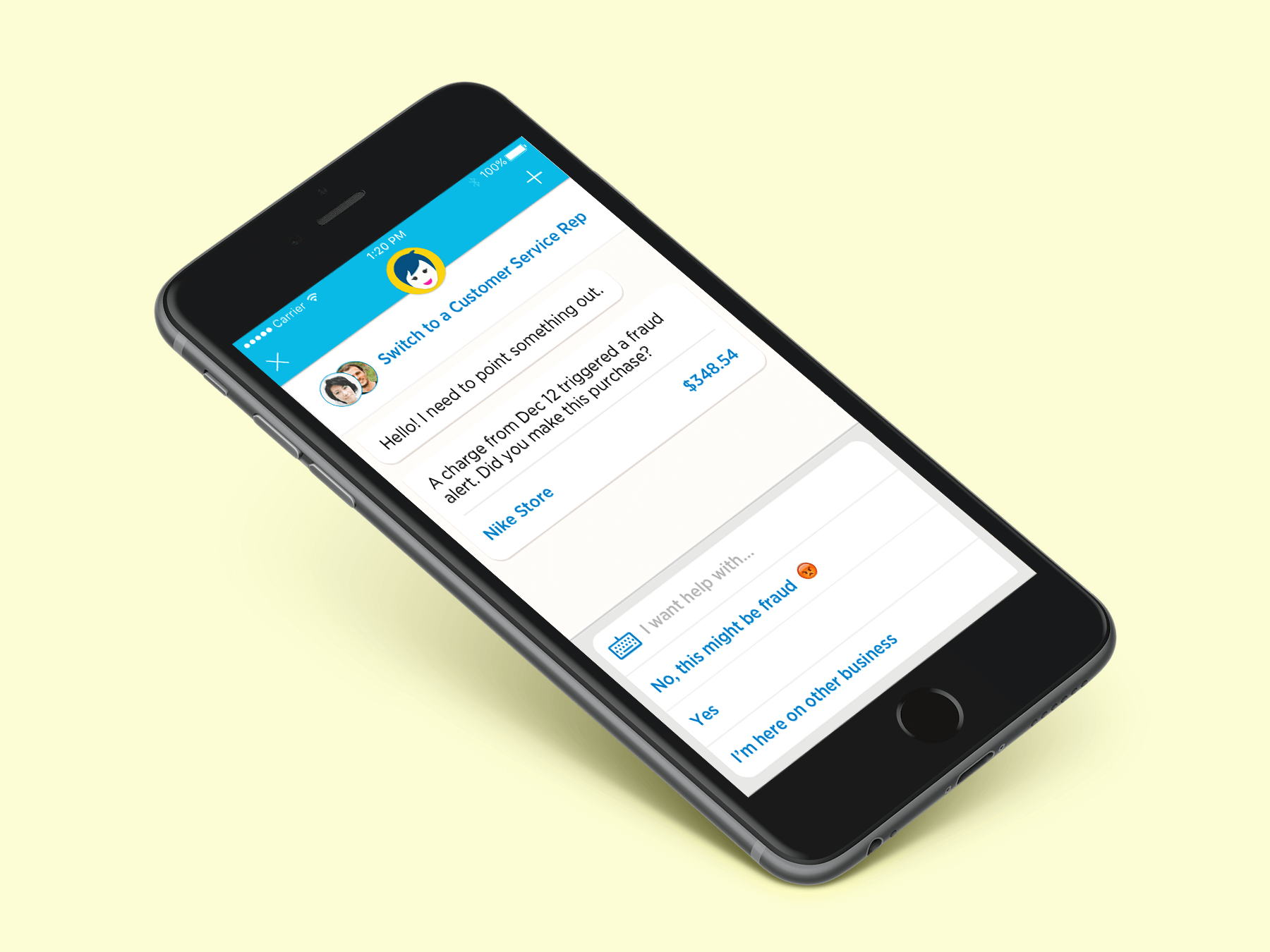
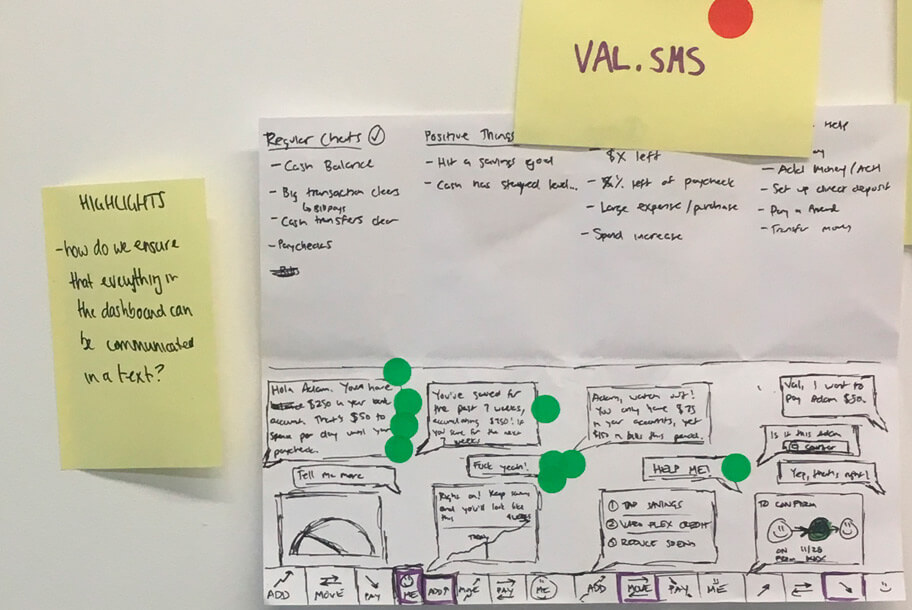
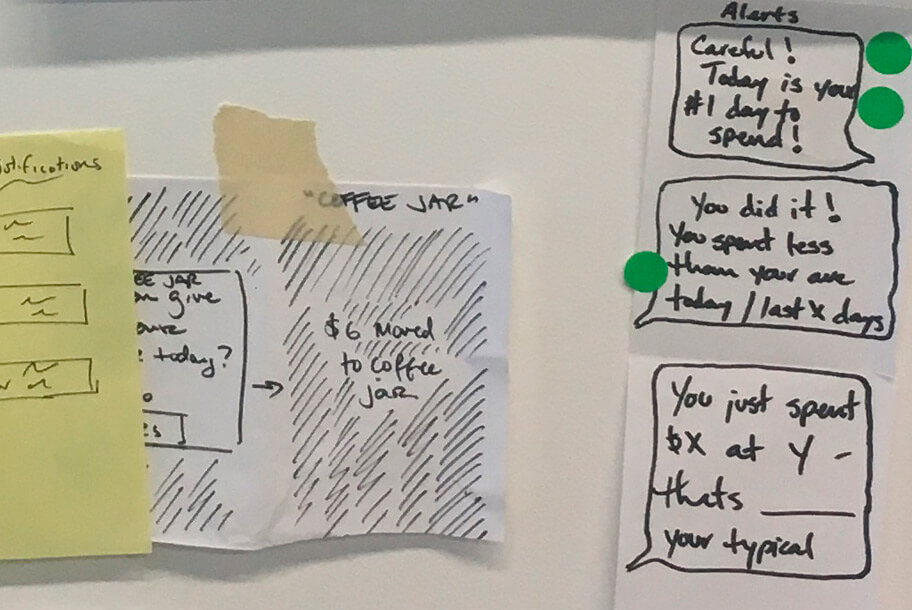
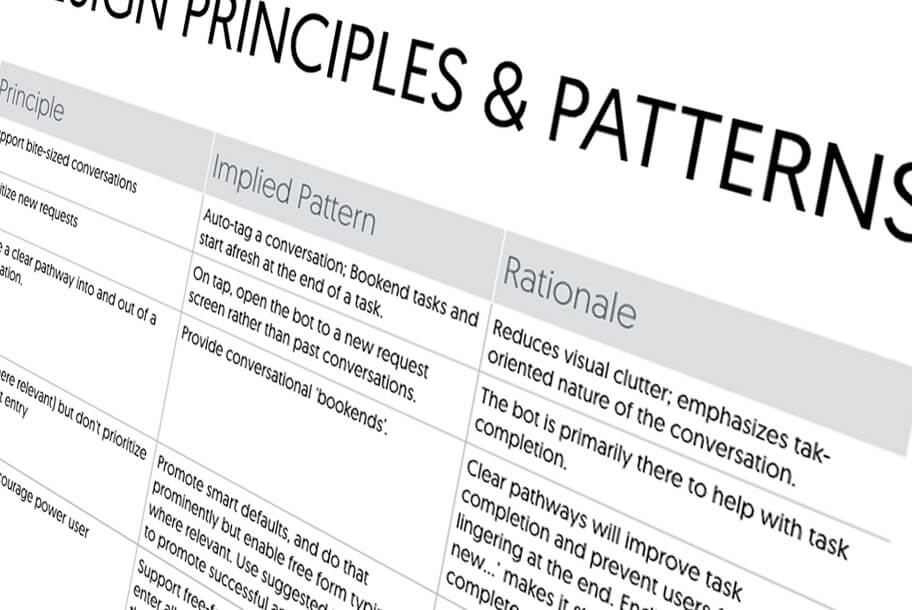
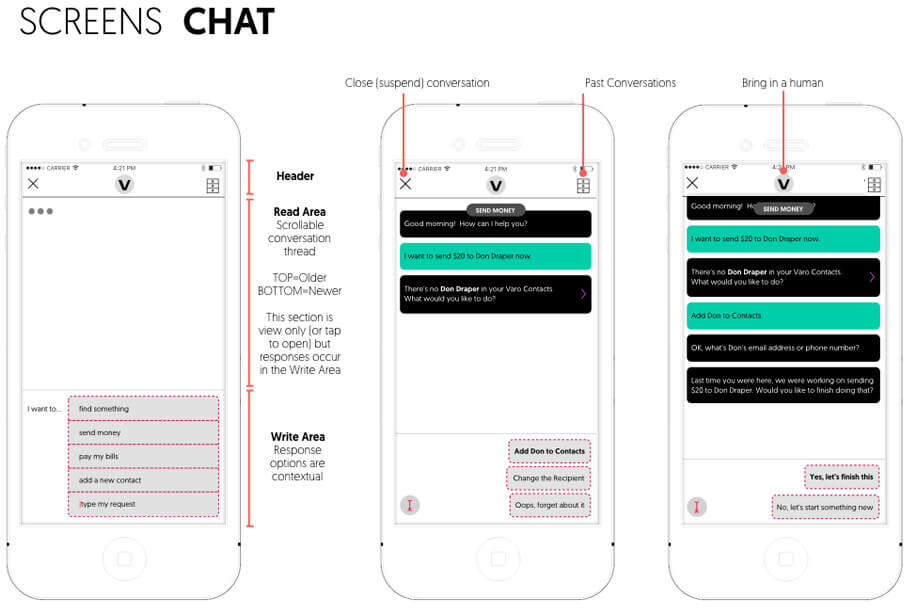
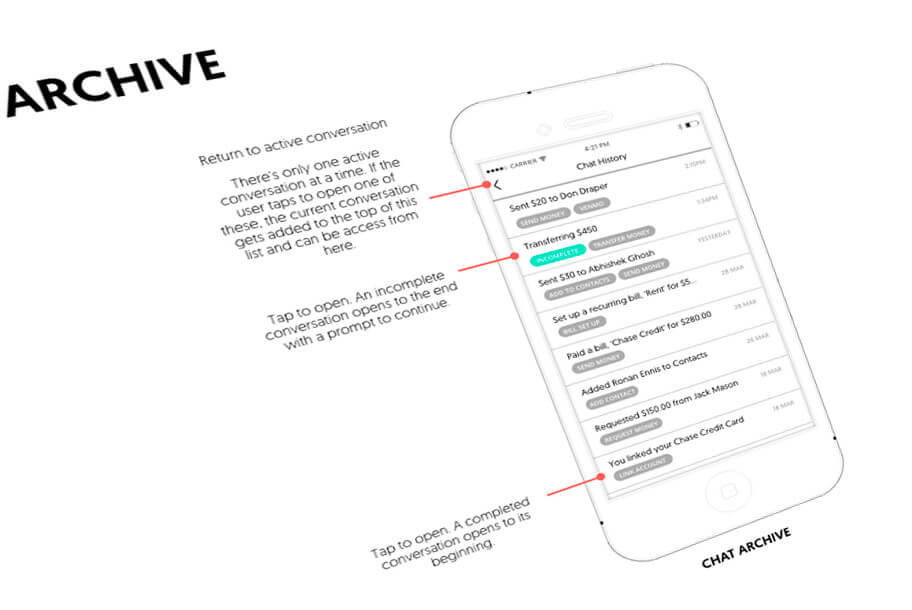
At the time, conversational interfaces had relatively few established patterns. I drew on my experience creating design patterns at Samsung and Motorola, treating common conversation flows as reusable building blocks that could make the interface flexible and scalable.
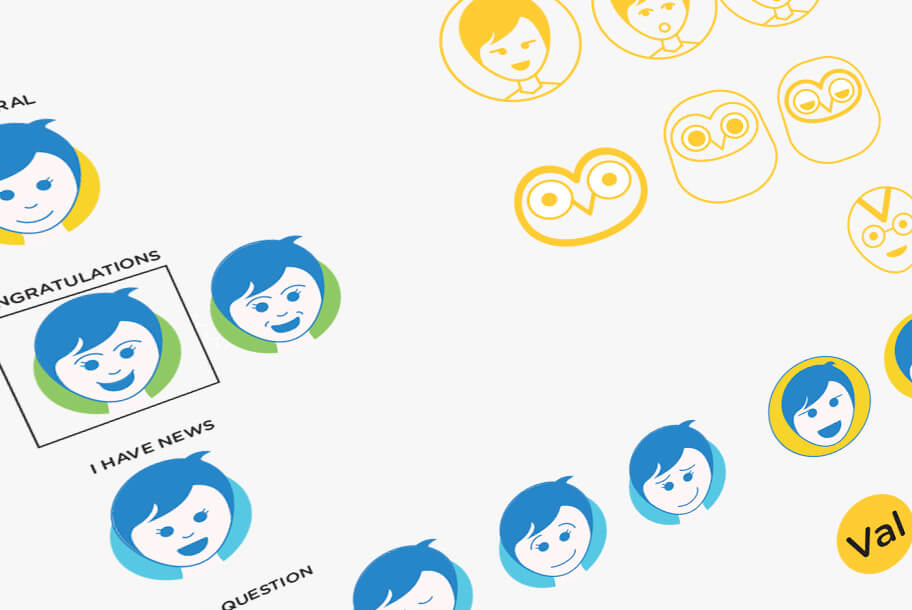
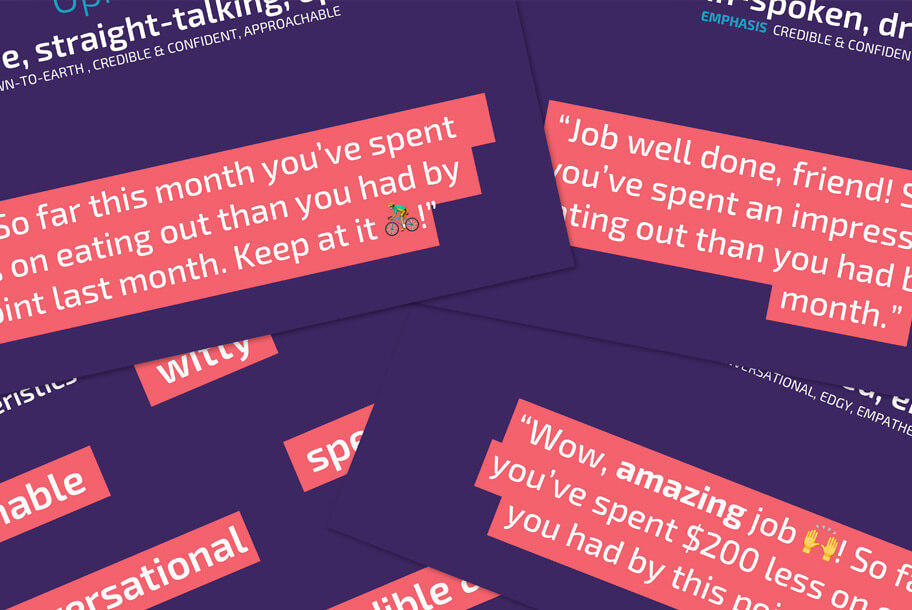
Alongside the interaction design, I ran tone-of-voice workshops and directed the visual design of our chatbot, Val. We explored characters ranging from coach to friend to mentor, then tested how people responded. One finding was especially clear: users didn't want a bot that judged them about money. We settled on a supportive, mentor-like personality with a neutral but encouraging tone.
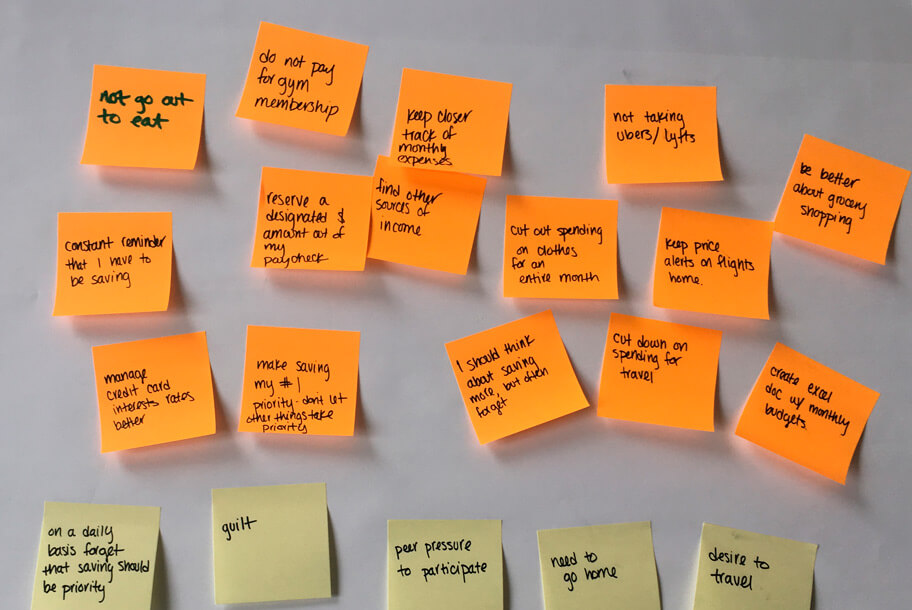
The project reminded me that good design depended less on having all the answers than on asking useful questions, investigating them, and making sense of what we learned.
Designing a conversational interface and personality was new territory for me, but the fundamentals—understanding people, building coherent patterns, and testing assumptions—were familiar. The medium had changed; the core design work hadn't.